Place to visit / Lisbon
National Pantheon, Lisbon, Visitor Guide & Things to Do Nearby
Plan your visit, then discover National Pantheon as part of a self-guided story through Lisbon.
Explore all of LisbonOn a self-guided walking route
- 11 stops
- 3.4 km
- 110 min
- ★ 4.3 (175)
Route starts 1020 m from here, about 12 min walk

About National Pantheon
The National Pantheon has one of the most entertaining origin stories of any building in Europe. Originally the Church of Santa Engracia, construction began in the late 16th century and dragged on for so long that Portuguese people coined the expression "Obras de Santa Engracia" to describe any project that never seems to get finished. The church was not completed until 1966, nearly 400 years after construction started. The building never actually opened as a functioning church, making it perhaps history's most elaborate religious structure that never hosted a single service.
In 1916, during the First Portuguese Republic, the perpetually unfinished church was repurposed as a National Pantheon to honor Portugal's greatest cultural and historical figures. The octagonal floor plan centered on a Greek cross now holds tombs and cenotaphs of explorers, presidents, poets, and artists. One of the most beloved interments is that of Amalia Rodrigues, the legendary Fado singer whose voice became synonymous with Portuguese soul and longing.
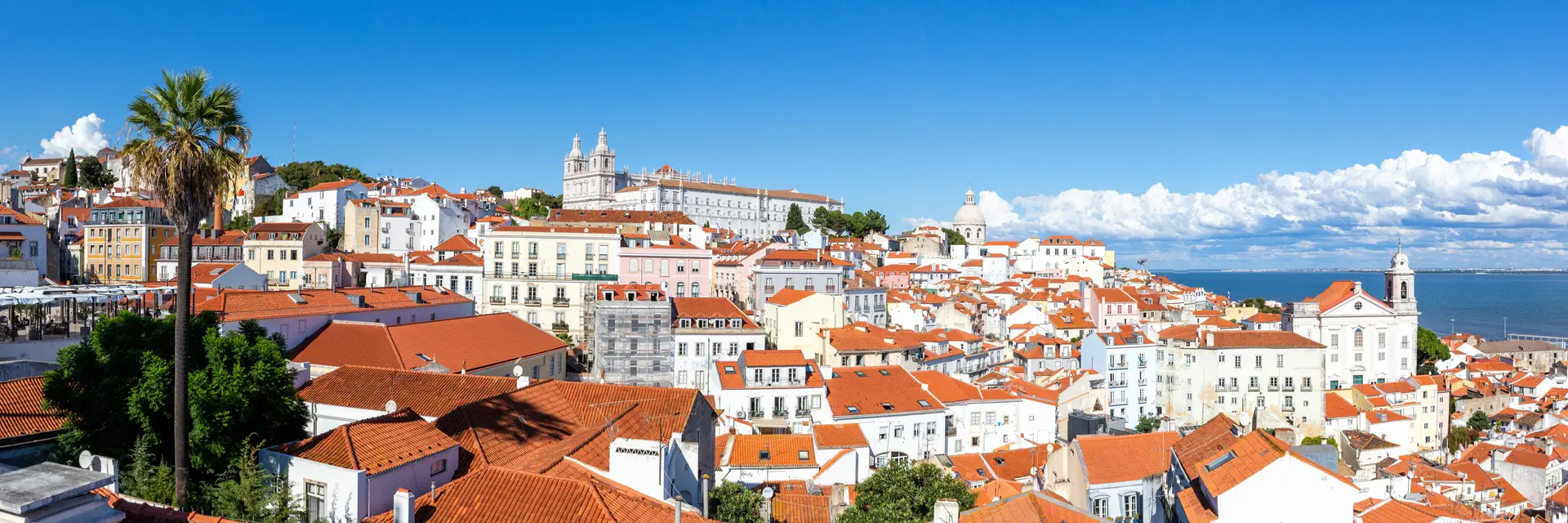
The interior preserves the majestic character originally intended for the church, with colorful decorative marbles characteristic of Portuguese Baroque creating a visually stunning environment. The dome offers 360-degree views of the Tagus River and the city, providing one of Lisbon's most underrated panoramic viewpoints. Questo's explorations of Lisbon's eastern neighborhoods bring you to the Pantheon with stories that connect the building's comically long construction history to the remarkable people honored within its walls.
Plan Your Visit
- Address
- Campo de Santa Clara, 1100-471 Lisboa, Portugal
Loading map…
Frequently asked questions
Why did the National Pantheon take so long to build?
Who is buried in the National Pantheon Lisbon?
Can you go to the top of the National Pantheon?
Play through this place