FIFA World Cup 2026 in Mexico City: The Capital of Football Returns to the World Stage
Mexico City is the World Cup host that carries the most history in the tournament's story. The Estadio Azteca has hosted more World Cup matches than any other stadium on earth, including the 1970 Final and the 1986 Final, and the 2026 tournament's opening match is scheduled here. For international fans arriving in the Mexican capital, the city offers one of the richest cultural, culinary, and archaeological experiences in the Western Hemisphere, combined with a football atmosphere that is without peer in the Americas.
Ciudad de México is 21 million people and one of the most complex cities on earth: the Aztec ruins beneath the colonial city beneath the modernist urban experiment, all layered simultaneously and all visible if you know where to look. Groups with 3-4 days will find it impossible to exhaust.
The World Cup in Mexico City
Estadio Azteca, with a capacity of 87,000, the largest stadium in Latin America, hosts World Cup matches in 2026 including the opening match of the tournament. The stadium is in the Coyoacán/Pedregal area of southern Mexico City, about 30-40 minutes by Metro from the historic center. Getting there: Metro Line 2 to Tasqueña station, then the tren ligero (light rail) to Estadio Azteca station. Rideshare is the alternative but expect significant congestion on match days.
Fan zones are expected across the Zócalo, the Paseo de la Reforma, and Parque Lincoln in Polanco throughout the tournament.
What to Do in Mexico City Between Matches
The Historic Center: Zócalo and Templo Mayor
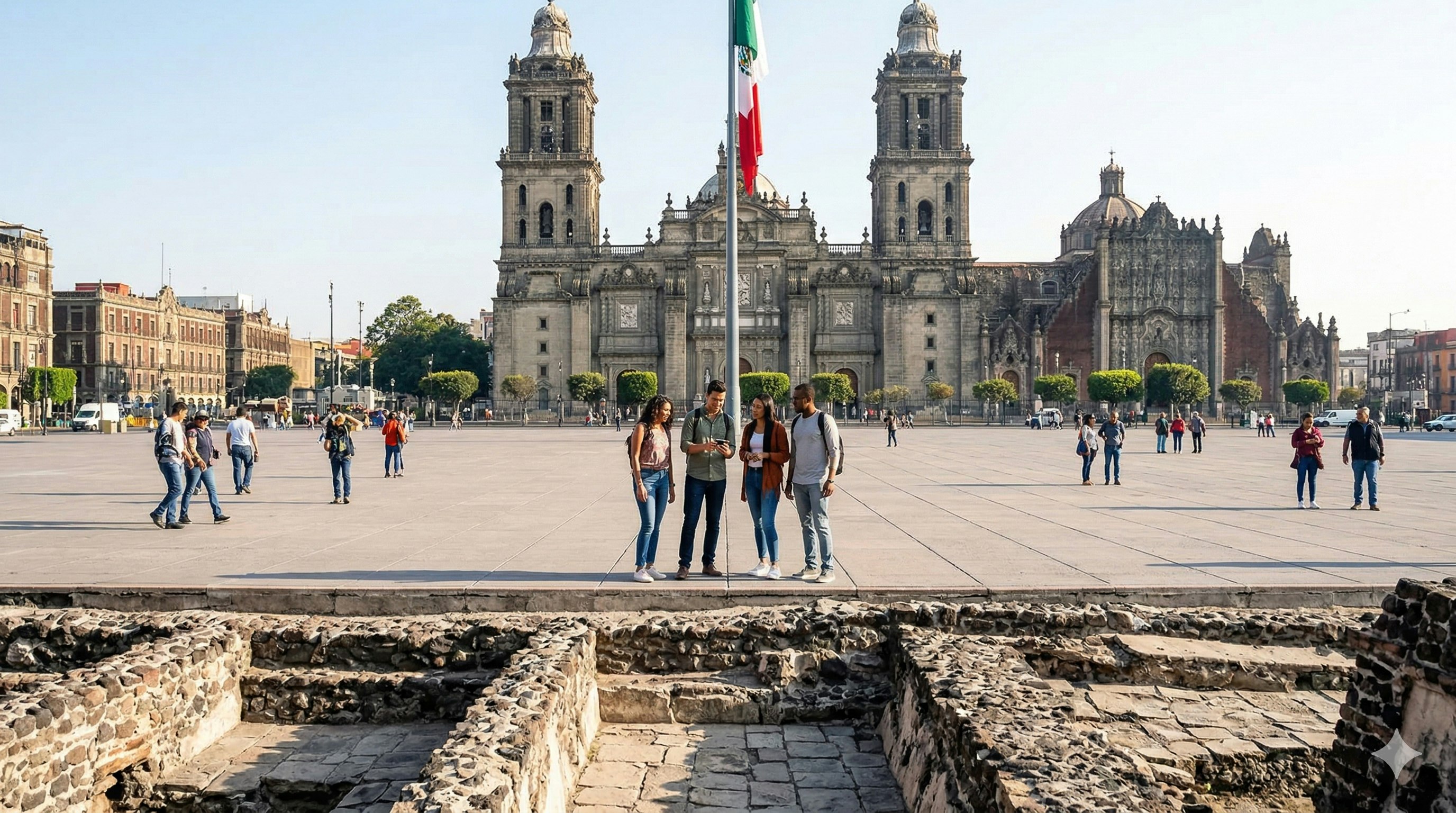
The Zócalo, the central plaza of Mexico City, one of the largest public squares in the world, is the physical and symbolic heart of Mexico: the Metropolitan Cathedral (construction began in 1573 and continued for 240 years) on the north side; the National Palace (with Diego Rivera's extraordinary mural cycle depicting Mexican history from the Aztec era to the 20th century) on the east; and directly beneath the northeast corner of the plaza, the Templo Mayor, the excavated ruins of the main temple of Tenochtitlan, the Aztec capital that Mexico City was built on top of. The combination of the 16th-century Spanish colonial center built literally above the Aztec city is the most dramatic urban archaeology in the Americas.
The Templo Mayor museum and site is one of the most important archaeological sites in the Western Hemisphere. Book in advance.
Xochimilco
South of the city center, Xochimilco is the surviving remnant of the lake and canal system that once surrounded Tenochtitlan, the "floating gardens" (chinampas) that the Aztecs used to grow food and the canal system that was the city's transport network. Renting a trajinera (the flat-bottomed, flower-decorated boats) with a group for 2-3 hours, passing the floating mariachi bands and the food boats, is one of the most purely enjoyable half-days in Mexico City. UNESCO World Heritage Site.
Teotihuacán
About an hour northeast of Mexico City by car or bus, Teotihuacán is the most visited archaeological site in Mexico: the Pyramid of the Sun (the third largest pyramid in the world), the Pyramid of the Moon, the Avenue of the Dead, and the Temple of Quetzalcoatl are all accessible within the site. The pyramids predate the Aztec civilization by a thousand years and were already ancient ruins when the Aztecs arrived. Arriving before 9 AM beats the crowds and the heat.
Coyoacán and Frida Kahlo
Coyoacán, the colonial-era neighborhood south of the center where Diego Rivera and Frida Kahlo lived and Leon Trotsky spent his Mexican exile, is the most charming neighborhood in Mexico City: the cobblestone streets, the weekend market in the central plaza, the cafés, and the two museums that the Kahlo-Rivera history demands. The Frida Kahlo Museum (La Casa Azul) requires advance booking and sells out significantly ahead. The Leon Trotsky Museum, a few blocks away, is less visited and equally interesting.
Polanco and the Anthropology Museum
The Museo Nacional de Antropología in Chapultepec Park is the greatest archaeological museum in the Americas and one of the most important in the world, the Aztec Sun Stone (often called the Aztec Calendar), the Olmec heads, the Mayan artifacts, and the reconstructed Aztec ceremonial items are all here. Allow at least 4-5 hours; it is not a museum to rush.
Polanco, the upscale neighborhood north of Chapultepec, has the highest concentration of international restaurants and luxury hotels in the city, plus Avenida Presidente Masaryk (the Champs-Élysées of Mexico City). For groups who want the high-end version of Mexican dining, this is the address.
Mexico City Food
Mexico City's food is extraordinary in every register. The street tacos (al pastor from the trompos on street corners, barbacoa on weekend mornings, carnitas at the market stalls) are the foundation and require no restaurant. The Mercado de San Juan in the Centro Histórico has the finest specialty food market in the city, imported cheeses, fresh sushi, Japanese wagyu, and Mexican delicacies alongside each other. For formal dining: the restaurant scene around Colonia Roma and Colonia Condesa has made Mexico City one of the world's great fine-dining destinations in recent years, with restaurants appearing consistently in the Latin America's 50 Best lists.
Explore Mexico City with Questo app
The Questo city adventures take your group through Mexico City's layered history, the Aztec foundations, the colonial overlay, the 20th-century modernism, at your own pace, in the most historically dense city in the Americas.
Getting Around
Mexico City's Metro, one of the largest in the world, 12 lines and 195 stations, is the most efficient way to move across the city. Fares are extremely low. Lines 1 and 2 cover the Centro, Chapultepec, and connections to the south. The Metrobús (BRT) covers Reforma, Insurgentes, and other major corridors. Rideshare (Uber operates extensively and is the recommended option over street taxis for visitors unfamiliar with the city). To the Estadio Azteca: Metro Line 2 to Tasqueña, then tren ligero.
Best bases for World Cup: Centro Histórico for maximum historical immersion. Colonia Roma or Condesa for the restaurant and café culture and a more residential feel. Polanco for the Anthropology Museum proximity and international hotel options.
Explore with Questo
Ready to explore? Play a self-guided quest in the cities mentioned in this article.
