Place to visit / Berlin
Stasi Museum, Berlin, Visitor Guide & Things to Do Nearby
Plan your visit, then discover Stasi Museum as part of a self-guided story through Berlin.
Explore all of Berlin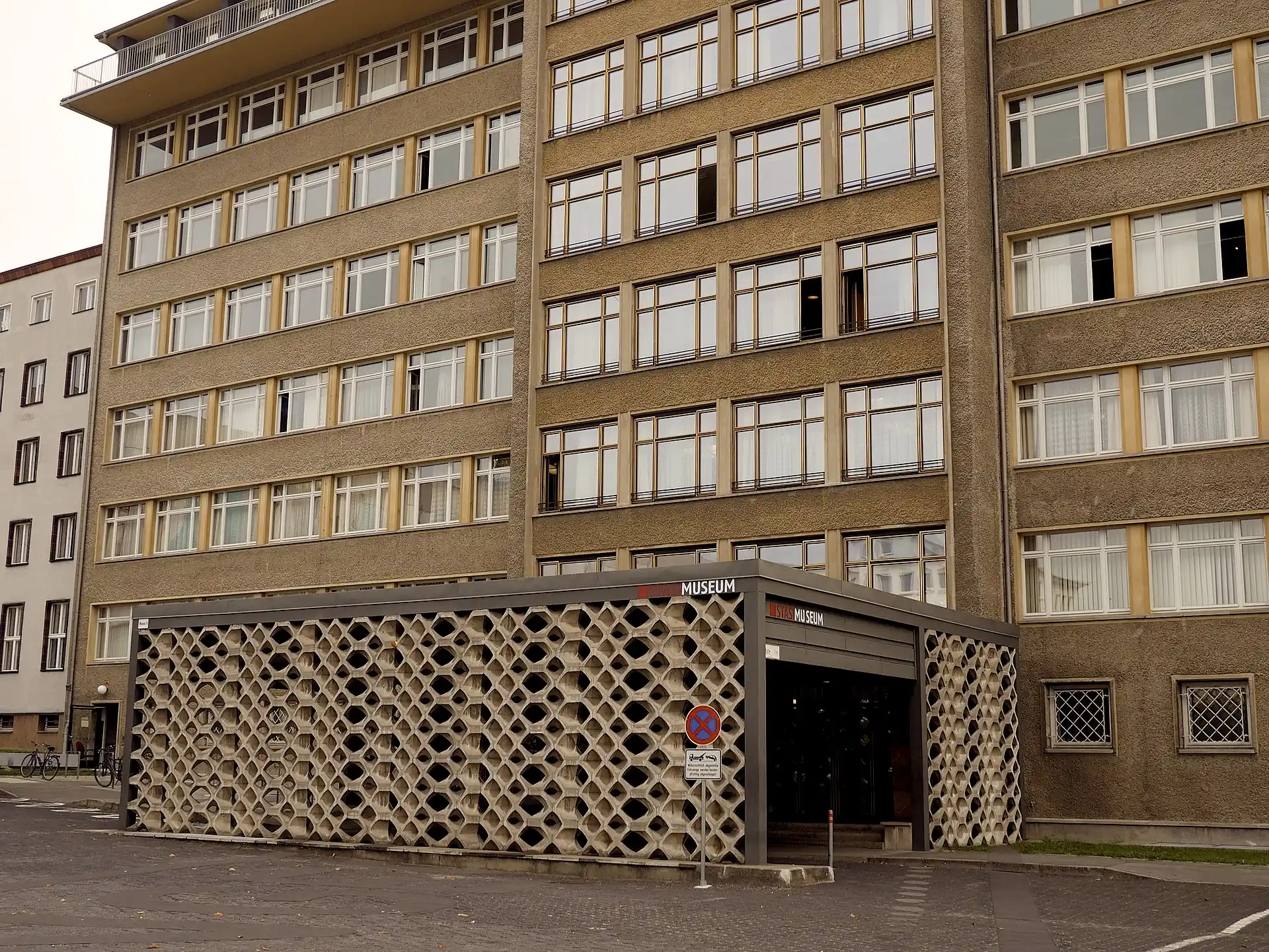
About Stasi Museum
The Stasi Museum is housed in the former headquarters of the East German secret police (Ministerium fur Staatssicherheit) in Berlin-Lichtenberg. It offers a chilling look at one of the most pervasive surveillance states in history.
The museum is centred on the office and private quarters of Erich Mielke, the minister who ran the Stasi for 32 years (1957-1989). His office has been preserved exactly as he left it: the wood-panelled walls, the desk, the secure telephone lines. It feels like he just stepped out.
The Stasi employed over 91,000 full-time staff and recruited an estimated 189,000 informal collaborators (Inoffizielle Mitarbeiter), meaning roughly one in every 63 East Germans was reporting on their neighbours, friends, or family.
The museum displays the tools of surveillance: hidden cameras in watering cans, microphones in ties, scent samples collected from dissidents' chairs (stored in jars to track people by smell using dogs). The sheer creativity of the surveillance apparatus is as disturbing as it is inventive.
When the Berlin Wall fell on November 9, 1989, Stasi employees began shredding files. Citizens stormed the building on January 15, 1990, stopping the destruction and preserving the archives that would later help Germans reckon with their history.
If you're on a Questo quest through Berlin, the Stasi Museum is a stop where the machinery of state surveillance is laid bare, and the courage of ordinary people who stopped its final cover-up is remembered.
Plan Your Visit
- Address
- Ruschestraße 103, 10365 Berlin, Germany