Place to visit / Amsterdam
De Waag, Amsterdam, Visitor Guide & Things to Do Nearby
Plan your visit, then discover De Waag as part of a self-guided story through Amsterdam.
Explore all of AmsterdamOn a self-guided walking route
- 11 stops
- 2.2 km
- 77 min
- ★ 4.5 (329)
The route starts here
3 more routes pass here
About De Waag
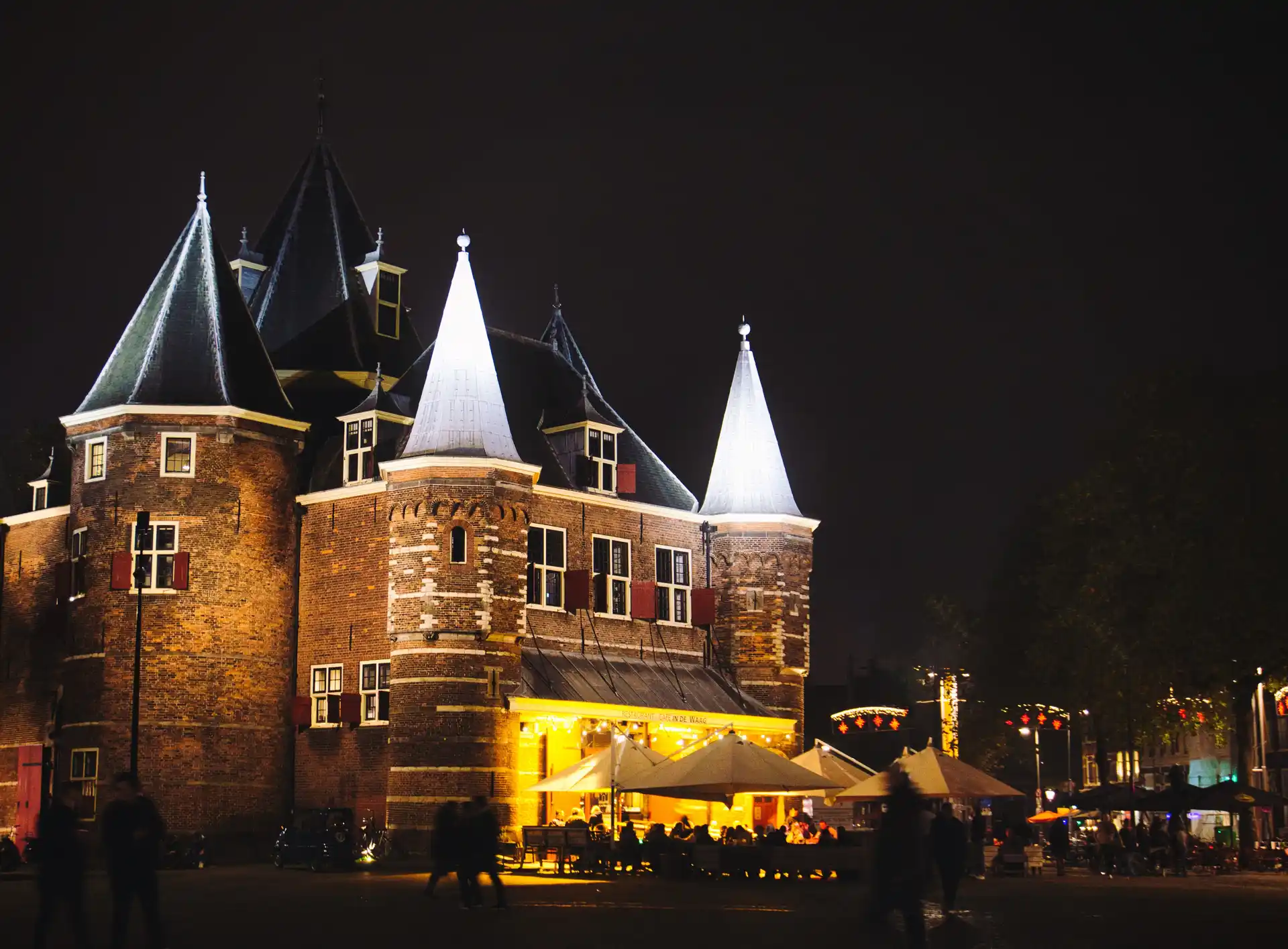
De Waag, the "Weighing House," is not just a building. It's a story about transformation, how a city reinvents itself while carrying its past forward. Built in 1488 as Sint Antoniespoort, a city gate in Amsterdam's medieval walls, it is the oldest non-religious building in Amsterdam. For nearly 150 years, it served its purpose: controlling who and what entered and exited the medieval city.
Then Amsterdam grew. The city expanded beyond those medieval walls, making the gate obsolete. Between 1603 and 1613, the walls were demolished, but De Waag wasn't torn down with them. Instead, it was repurposed. The upper floors were divided among various guilds: blacksmiths, painters, masons, and surgeons all had spaces here, using it as meeting halls and workshops. The building became a living museum of Amsterdam's crafts and professions.
What history was made in this building defies imagination. The surgeons' guild held anatomy lectures here between 1619 and 1639, dissecting the bodies of executed criminals in front of an audience. These weren't quiet medical classes. They were public spectacles, some of the most important educational events of the Dutch Golden Age. One of these dissections was immortalized by Rembrandt in his 1632 painting "The Anatomy Lesson of Dr. Nicolaes Tulp," one of the greatest portraits of scientific inquiry ever created. When you stand in De Waag, you're standing in the building depicted in that masterpiece.
Between 1690 and 1691, a dome-shaped hall was added to the structure, giving it additional space and presence. Today, De Waag stands as a museum and cultural space, a building that has survived from medieval times through the Dutch Golden Age to the present. It's a survivor, a witness, and a place where history was written not once but many times over.
Plan Your Visit
- Address
- Marktkraam, Nieuwmarkt, 1012 CR Amsterdam, Nederland
Loading map…
Frequently asked questions
What was De Waag originally?
What happened at De Waag with the surgeons?
Can you visit De Waag today?
Play through this place
Explore De Waag with a Questo quest

Romantic Amsterdam: Fairytale or Tragedy Walking Tour & Escape Game
0.0 km away

Rembrandt's Mystery Quest: The Lost Painting in Amsterdam
0.4 km away · 4 min walk

Amsterdam’s Red Light: The Sailor’s Lost Treasure
0.4 km away · 5 min walk

Ghosts of Amsterdam: The Haunting Stories
0.4 km away · 5 min walk