Place to visit / Rome
The Pantheon, Rome, Visitor Guide & Things to Do Nearby
Plan your visit, then discover The Pantheon as part of a self-guided story through Rome.
Explore all of Rome →On a self-guided walking route
- 9 stops
- 5.2 km
- 87 min
- ★ 4.6 (1947)
Route starts 1675 m from here, about 20 min walk
About The Pantheon
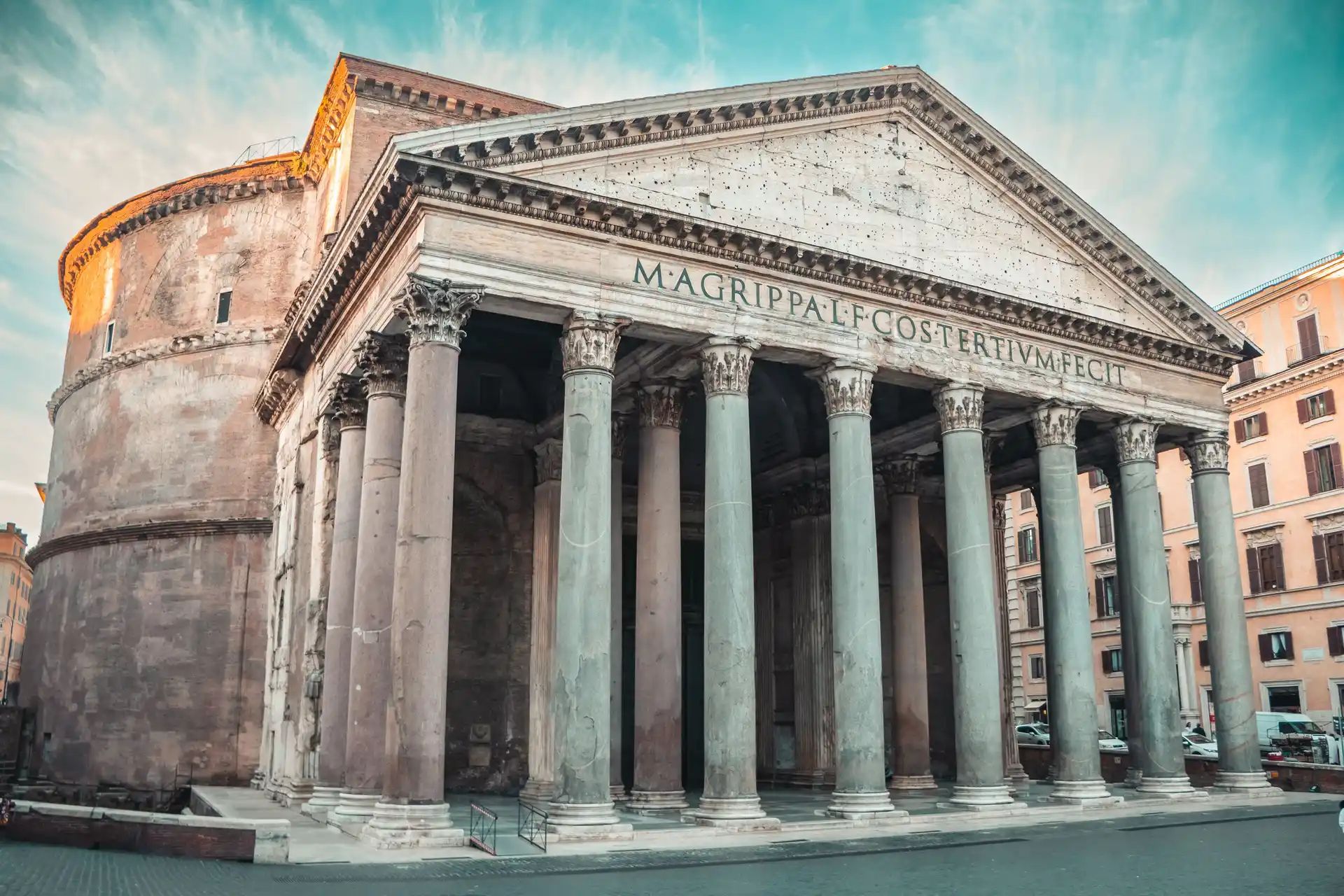
The Pantheon is the best-preserved building from ancient Rome and one of the most influential structures in the history of architecture. Nearly 1,900 years after it was completed, its dome remains the largest unreinforced concrete dome in the world.
The original Pantheon was built by Marcus Agrippa in 27 BC. The inscription on the facade, "M.AGRIPPA.L.F.COS.TERTIUM.FECIT" (Marcus Agrippa, son of Lucius, consul for the third time, built this), refers to that first building, which was destroyed by fire around 80 AD. The current Pantheon was built by Emperor Hadrian around 126 AD.
The dome's dimensions are staggering: 43.5 metres in diameter and 43.5 metres high, creating a perfect sphere that could fit inside the building. The only source of natural light is the oculus, a 9-metre circular opening at the apex of the dome. When it rains, water falls through the oculus onto the slightly convex marble floor, which is angled to drain it away.
In the early 7th century, Pope Boniface IV converted the Pantheon into a Christian church, the Church of St Mary and the Martyrs, which is why it survived the centuries of neglect and stone-robbing that destroyed most of Rome's ancient buildings.
The Pantheon holds the tombs of the painter Raphael and two Italian kings.
If you're on a Questo quest through Rome's centro storico, the Pantheon is a stop where standing under a 2,000-year-old dome makes you feel both very small and very grateful.
Plan Your Visit
- Address
- Piazza della Rotonda, 00186 Roma RM, Italy
Loading map…
Frequently asked questions
Is the Pantheon free to visit?
Why is the Pantheon's dome so special?
Play through this place