Place to visit / Paris
Moulin Rouge, Paris, Visitor Guide & Things to Do Nearby
Plan your visit, then discover Moulin Rouge as part of a self-guided story through Paris.
Explore all of Paris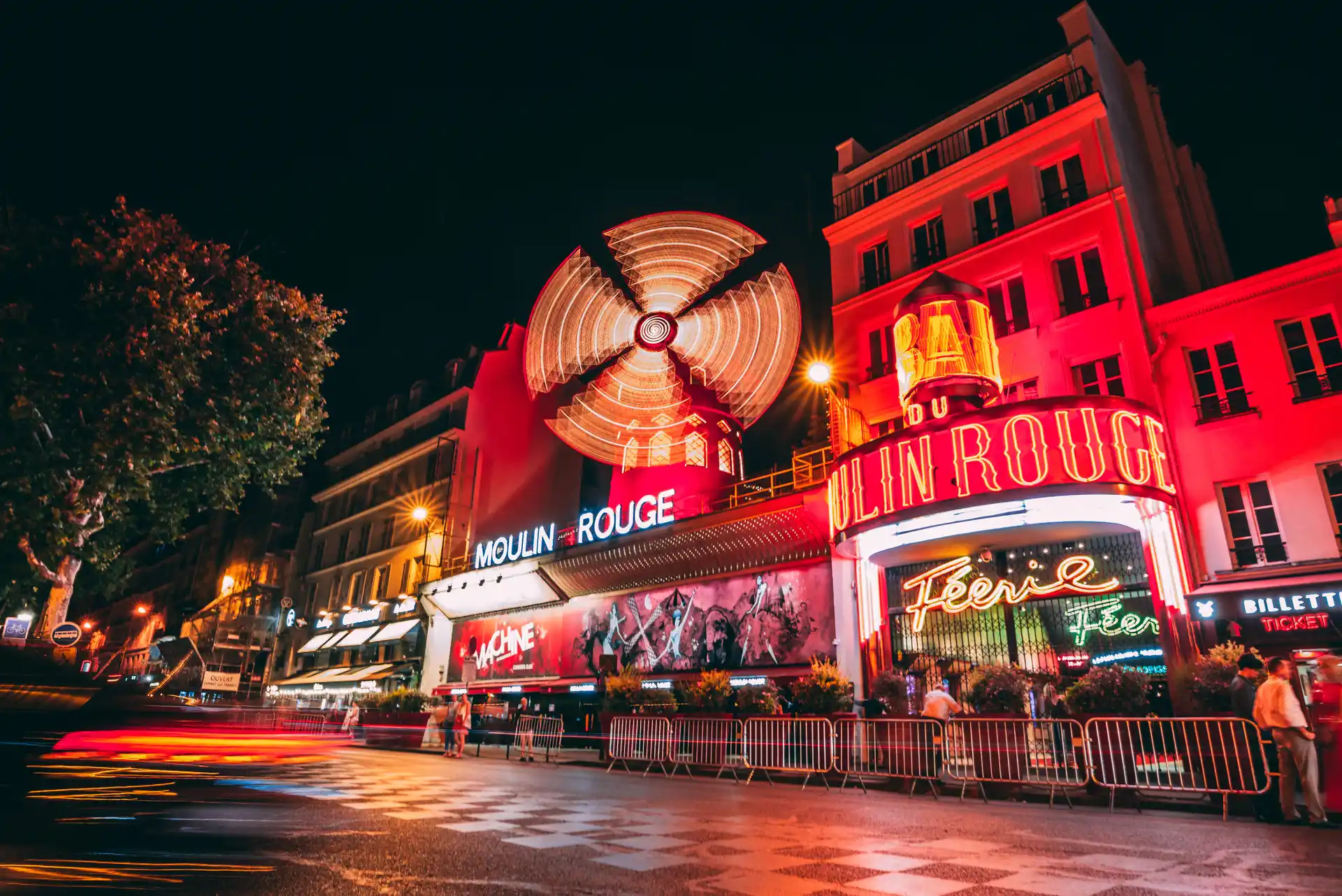
About Moulin Rouge
The Moulin Rouge is the world's most famous cabaret, sitting at the foot of Montmartre in the Pigalle district of Paris. Its red windmill has been a symbol of Parisian nightlife since it opened on October 6, 1889, the same year the Eiffel Tower debuted.
The cabaret was founded by Joseph Oller and Charles Zidler as an entertainment venue for all social classes. It quickly became famous for the can-can, a high-energy dance that was considered scandalous at the time. One of the most legendary dancers, La Goulue (Louise Weber), was so skilled she could kick a man's hat off his head while dancing.
The venue was immortalized by the paintings of Henri de Toulouse-Lautrec, who spent years sketching the dancers, musicians, and audience members. His posters for the Moulin Rouge are some of the most recognized images in art history.
In 1915, a fire destroyed much of the original building. It was rebuilt in 1921 and has continued to reinvent itself ever since. Today's show, "Feerie," features 60 performers from around the world, 1,000 costumes, and elaborate stage sets including a giant aquarium on stage.
The Moulin Rouge draws around 600,000 visitors a year. Dinner shows and late-night shows are both available, and booking in advance is strongly recommended.
If you're on a Questo quest through Montmartre, the Moulin Rouge is a landmark that connects you to the artistic revolution that made this hillside neighbourhood legendary.