Marienkirche, Berlin — Visitor Guide & Things to Do Nearby
About Marienkirche
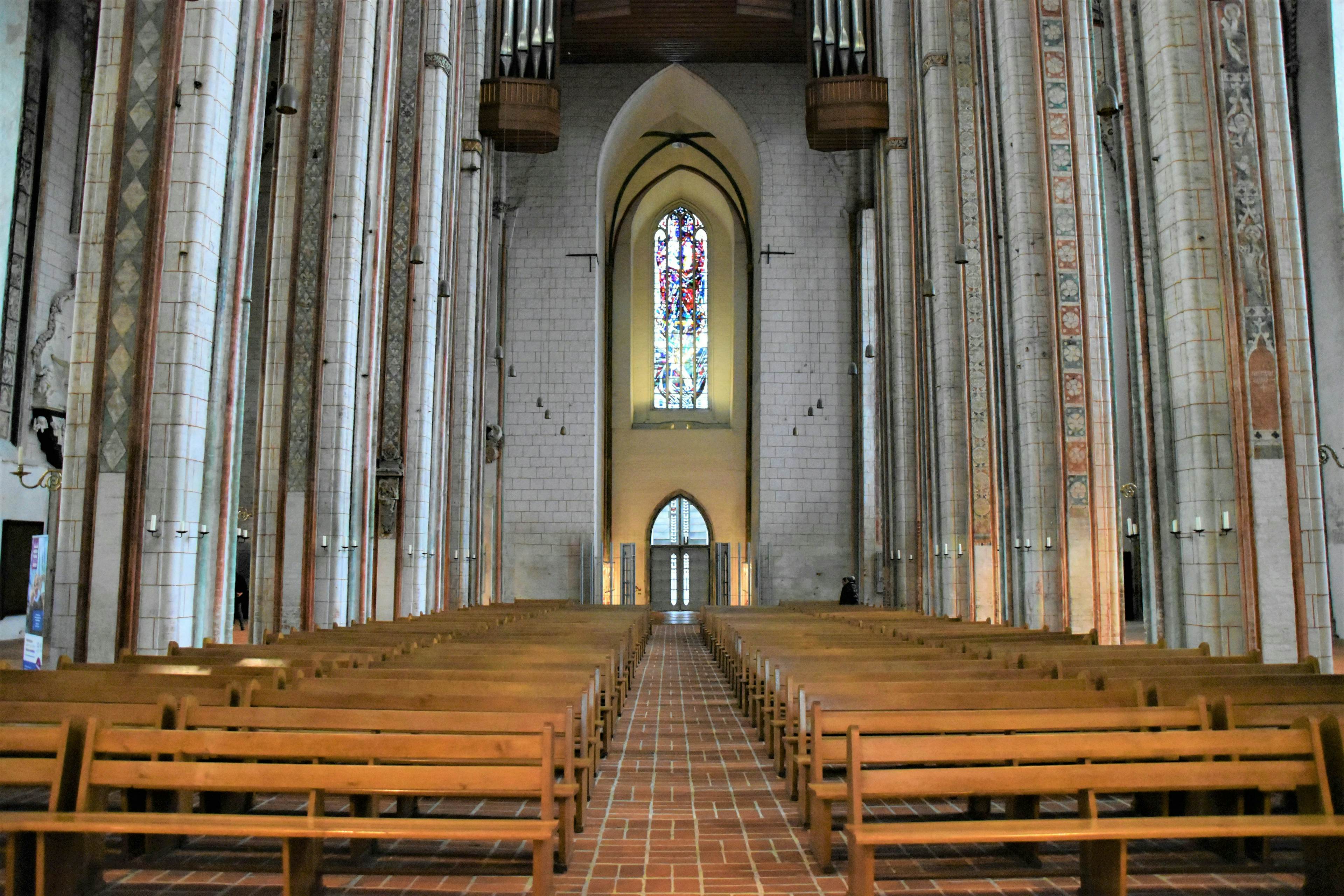
The Marienkirche (St. Mary's Church) is one of the oldest churches in Berlin, standing near the base of the Fernsehturm (TV Tower) in Alexanderplatz. It has been a place of worship since the late 13th century.
The church was first mentioned in records from 1292, though it may have been built as early as 1270. The Gothic hall church was originally made of fieldstone and later clad in brick, reflecting the transition of building materials in medieval Berlin.
One of the church's most remarkable features is the Totentanz (Dance of Death) fresco, a 22-metre-long painting discovered on the vestibule wall in 1860 and dated to around 1484. The fresco depicts figures from all walks of life, from bishops to beggars, dancing with skeletons, a medieval reminder that death comes for everyone equally.
The church also contains a marble pulpit carved by Andreas Schluter in 1703, considered one of the finest Baroque works in Berlin, and a 15th-century bronze baptismal font.
The Marienkirche is the only medieval parish church in central Berlin still in active use. It survived World War II largely intact, though the surrounding neighbourhood was completely destroyed. Today, the church stands somewhat isolated, surrounded by the open spaces of the GDR-era redesign of Alexanderplatz.
If you're on a Questo quest through central Berlin, the Marienkirche is a stop where a medieval church and a communist-era TV tower share one of the most surreal juxtapositions in any European city.
Plan Your Visit
- Address
- 10178 Berlin, Germany