Place to visit / Amsterdam
Jordaan District, Amsterdam, Visitor Guide & Things to Do Nearby
Plan your visit, then discover Jordaan District as part of a self-guided story through Amsterdam.
Explore all of AmsterdamOn a self-guided walking route
- 11 stops
- 3 km
- 106 min
- ★ 4.4 (162)
Route starts 100 m from here, about 1 min walk
About Jordaan District
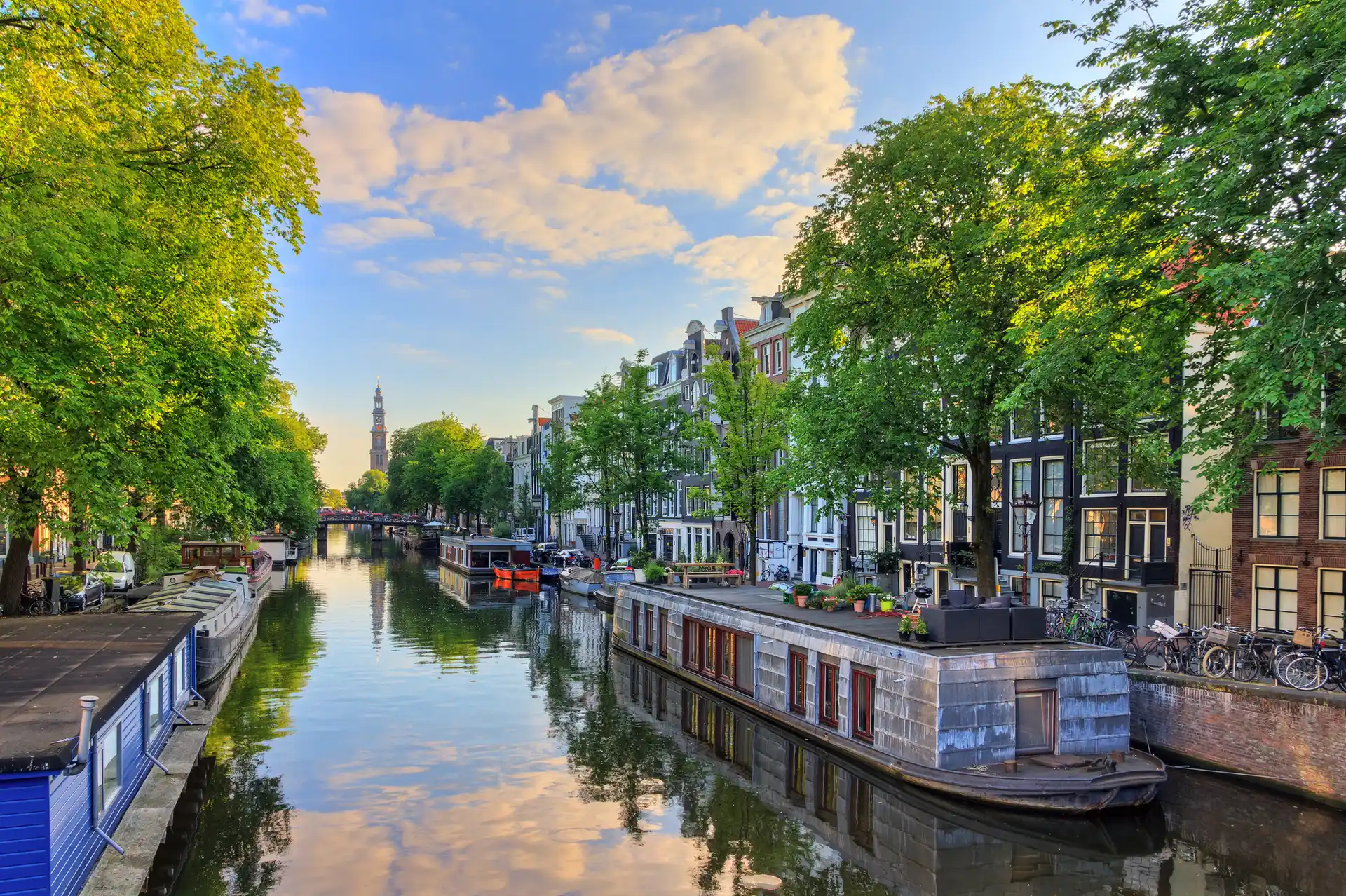
The Jordaan is one of Amsterdam's most alluring neighborhoods, and its character comes from a specific moment in history. Built starting in 1612 for the working classes and immigrants, it was designed as a neighborhood for people who had no access to wealth or status: Flemish refugees, Jewish immigrants fleeing persecution, Huguenot refugees from France. They came to Jordaan because they had nowhere else to go and because the city needed their labor.
For the first centuries, Jordaan was poor, struggling, and overcrowded. The streets had open sewers instead of covered drainage systems. Homes had no running water. The population swelled to around 80,000 by 1900, packed into narrow streets and cramped housing. It was the kind of neighborhood where survival was the daily goal, not comfort or luxury.
Yet something remarkable happened in Jordaan: community. The neighborhood developed a distinctive culture, with residents maintaining tight social bonds forged by shared struggle. "Hofjes," small courtyard complexes, were built to provide housing for elderly single women, a form of social welfare that emerged from community needs. Stone tablets on house facades documented the original inhabitants' professions, creating an unintentional directory of the neighborhood's past.
In the 20th century, Jordaan became a leftist stronghold, a neighborhood where workers' rights were defended fiercely. Riots erupted in 1835, 1886, 1917, and 1934, as residents fought against injustice and inequality. By the 1960s and 1970s, the neighborhood fell into further decline, and the city government proposed its demolition and "renewal." But something unexpected happened: artists and students, priced out of other neighborhoods, moved into Jordaan. They saw value in its authenticity, its character, its history.
Today, Jordaan is one of the most expensive neighborhoods in Amsterdam. The students and artists are largely priced out, replaced by the affluent. But the neighborhood retains its character, a living memory of where it came from, mixed with its present prosperity. Walking its streets, you can feel centuries of history: immigration, struggle, community, cultural renewal.
Plan Your Visit
- Address
- Westermarkt 20, 1016 GV Amsterdam, Netherlands
Loading map…
Frequently asked questions
What is the history of Jordaan?
Why is Jordaan now so expensive?
What are hofjes in Jordaan?
Play through this place