Place to visit / New Orleans
New Orleans Botanical Garden, New Orleans, Przewodnik dla zwiedzających i co robić w okolicy
Plan your visit, then discover New Orleans Botanical Garden as part of a self-guided story through New Orleans.
Explore all of New OrleansNa trasie do przejścia na własną rękę
- 13 przystanków
- 3.5 km
- 106 min
- ★ 4.7 (168)
Trasa zaczyna się 294 m stąd, około 4 min pieszo
O New Orleans Botanical Garden
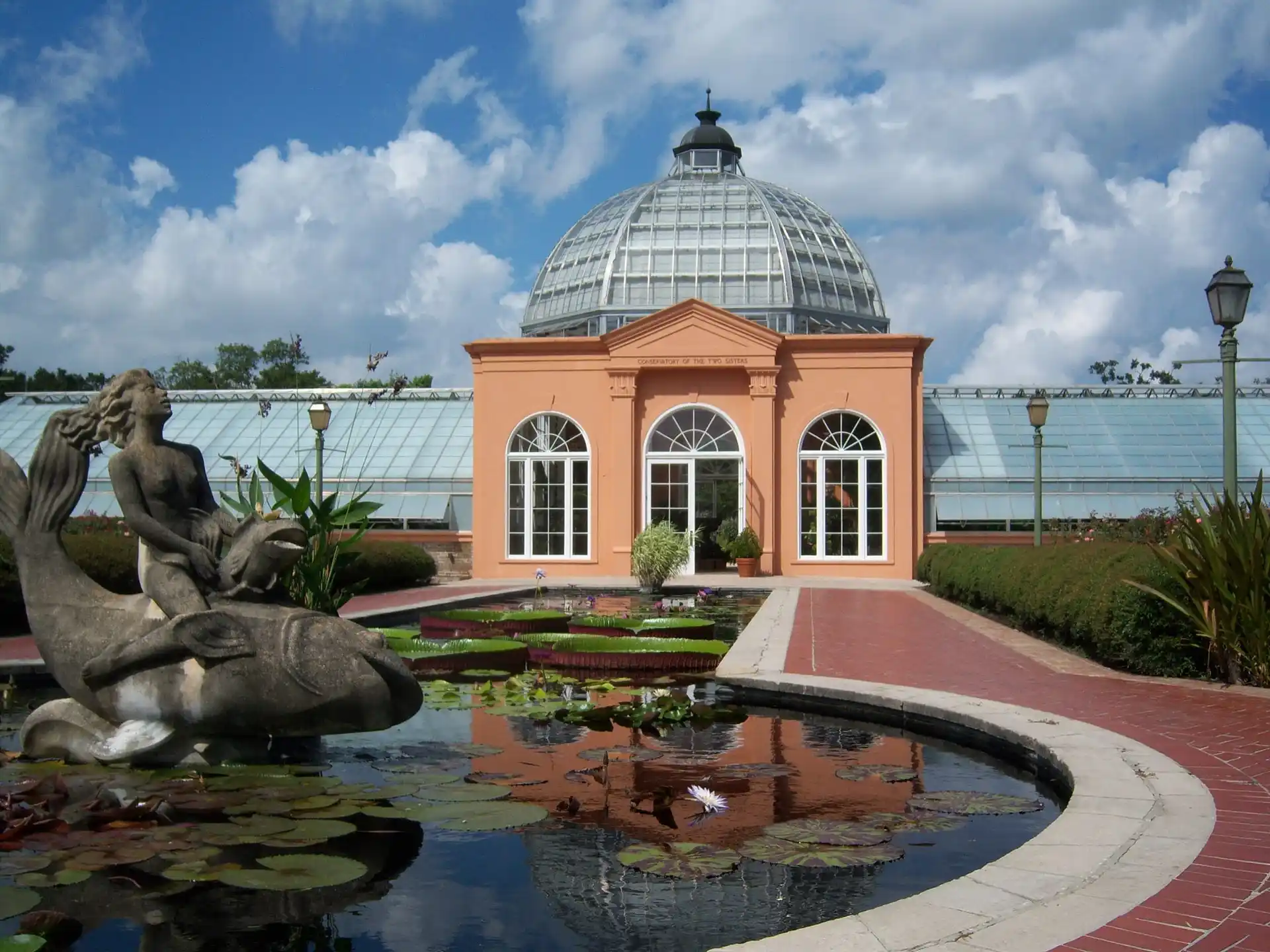
Discover New Orleans Botanical Garden, where Art Deco elegance meets horticultural artistry in one of America's rarest surviving examples of 1930s garden design. Three visionaries collaborated on this masterpiece: architect Richard Koch designed the overall structure, landscape architect William Wierdorn shaped the living spaces, and sculptor Enrique Alférez created twelve sculptural elements that anchor the garden's emotional landscape. What makes this garden truly extraordinary is Alférez's 66-year creative commitment; he created five sculptures in 1932, then returned again and again throughout his life, adding his final piece in 1998. Each sculpture tells stories of classical mythology and human form, transforming the garden into an open-air gallery where nature and art converse endlessly. The Art Deco style emphasizes geometric clarity and bold forms, principles evident in every planted border and sculptural focal point you'll encounter. Walking through these gardens feels like stepping into a carefully preserved moment from the 1930s, before modernism scattered design principles across competing aesthetic theories. A Questo city game takes you through these layered meanings, revealing how landscape architecture tells stories as compelling as any building.
Zaplanuj wizytę
- Adres
- 5 Victory Ave, New Orleans, LA 70119, United States
Loading map…
Często zadawane pytania
When was the New Orleans Botanical Garden created?
Who was Enrique Alférez and what did he create?
Why is the garden historically significant?
Play through this place