Place to visit / Budapest
Rumbach Street Synagogue, Budapest, Ghid vizitatori și ce de văzut în apropiere
Plan your visit, then discover Rumbach Street Synagogue as part of a self-guided story through Budapest.
Explore all of BudapestPe un traseu de explorat pe cont propriu
- 14 opriri
- 2.5 km
- 126 min
- ★ 4.4 (152)
Traseul pornește la 252 m de aici, cam 3 min de mers
Încă 1 trasee trec pe aici
Despre Rumbach Street Synagogue
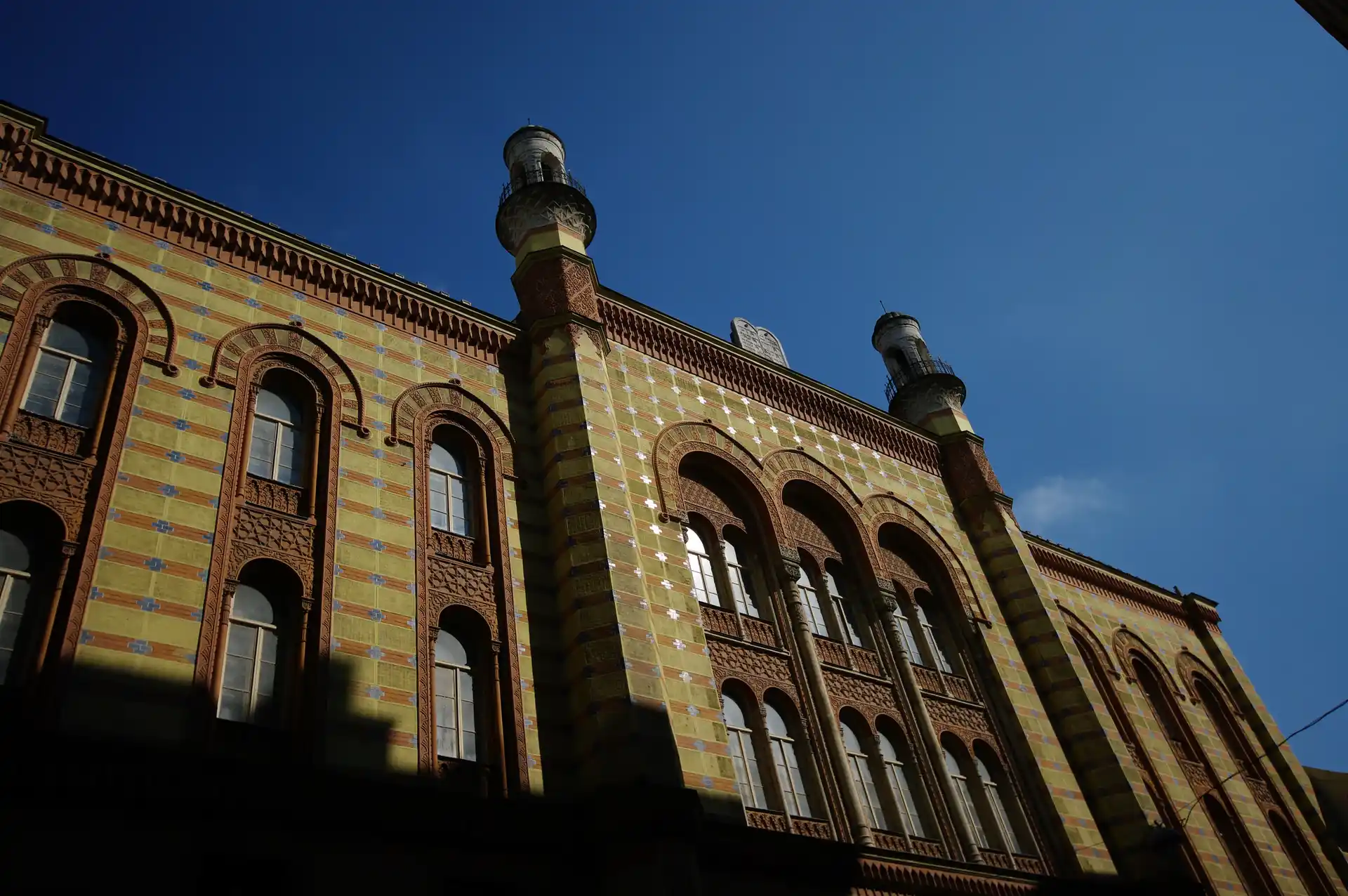
The Rumbach Street Synagogue is a hidden masterpiece designed by a 27-year-old Otto Wagner, who would later become one of the founding figures of the Secessionist movement that transformed European architecture. Wagner won the design competition in 1868, and the synagogue was inaugurated at Rosh Hashanah in 1872, marking its first services on one of Judaism's holiest days. The building represents a rare opportunity to see early work by an architect whose later career reshaped the face of Vienna and influenced design across the continent.
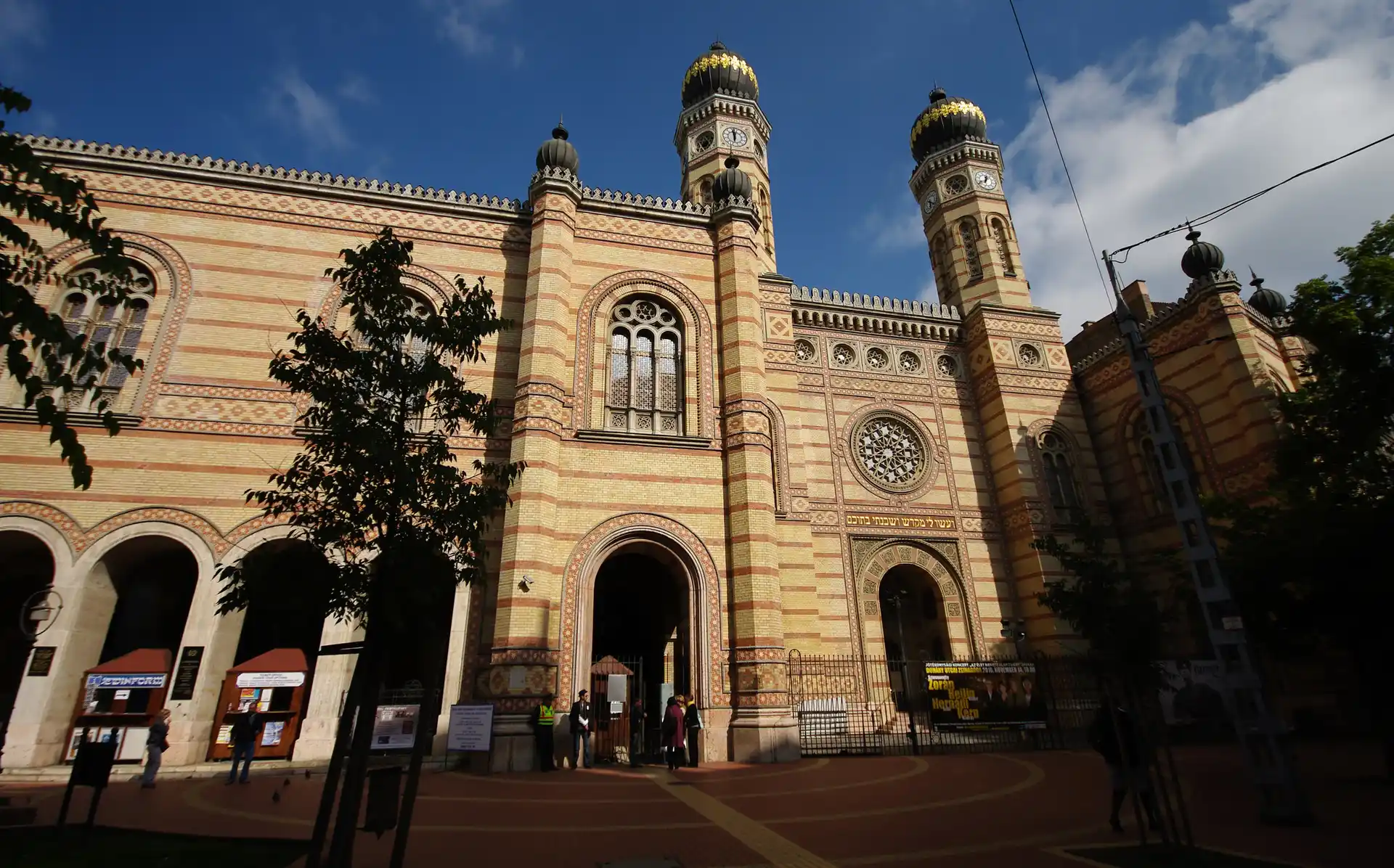
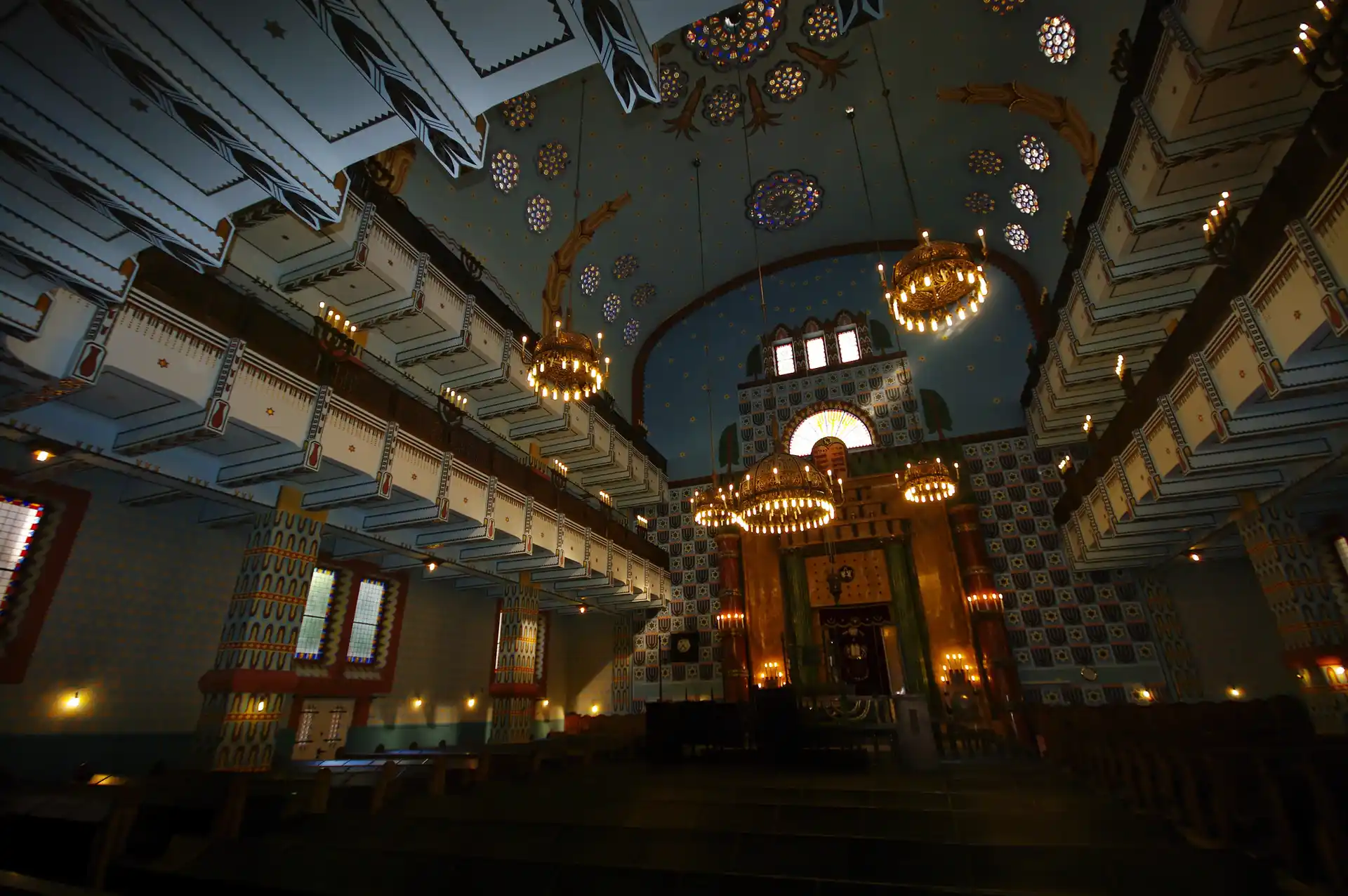
The synagogue's most striking feature is its complete octagonal design, creating a unique eight-sided sanctuary unlike any other in Budapest. The facade showcases Moorish Revival aesthetics through alternating bands of red and yellow brickwork that produce a captivating striped effect, flanked by slim turrets. Inside, the domed octagonal prayer hall is richly decorated with geometric patterns and arabesques in red, blue, and gold, evoking the Alhambra Palace. A women's gallery encircles the sanctuary on seven sides, supported by gilded pillars with soaring arches that draw the eye upward.
During World War II, the synagogue fell within the boundaries of the Budapest Ghetto and suffered significant damage. For decades it languished in disrepair, but a comprehensive restoration funded by the Budapest Government in 2021 carefully preserved the original decorative schemes. Today, the restored Rumbach reveals Otto Wagner's artistic vision in remarkable detail. Exploring it with Questo lets you discover this gem as part of the larger story of Budapest's Jewish Quarter.
Planifică-ți vizita
- Adresă
- Budapest, Rumbach Sebestyén u., 1074 Hungary
Loading map…
Întrebări frecvente
Who designed the Rumbach Street Synagogue?
What makes the Rumbach Synagogue unique?
Has the Rumbach Synagogue been restored?
Play through this place