Place to visit / Catania
Basilica Cattedrale di Sant'Agata, Catania, Przewodnik dla zwiedzających i co robić w okolicy
Plan your visit, then discover Basilica Cattedrale di Sant'Agata as part of a self-guided story through Catania.
Explore all of CataniaNa trasie do przejścia na własną rękę
- 13 przystanków
- 2.7 km
- 78 min
- ★ 4.6 (21)
Trasa zaczyna się 155 m stąd, około 2 min pieszo
Tędy prowadzi jeszcze 1 tras
O Basilica Cattedrale di Sant'Agata
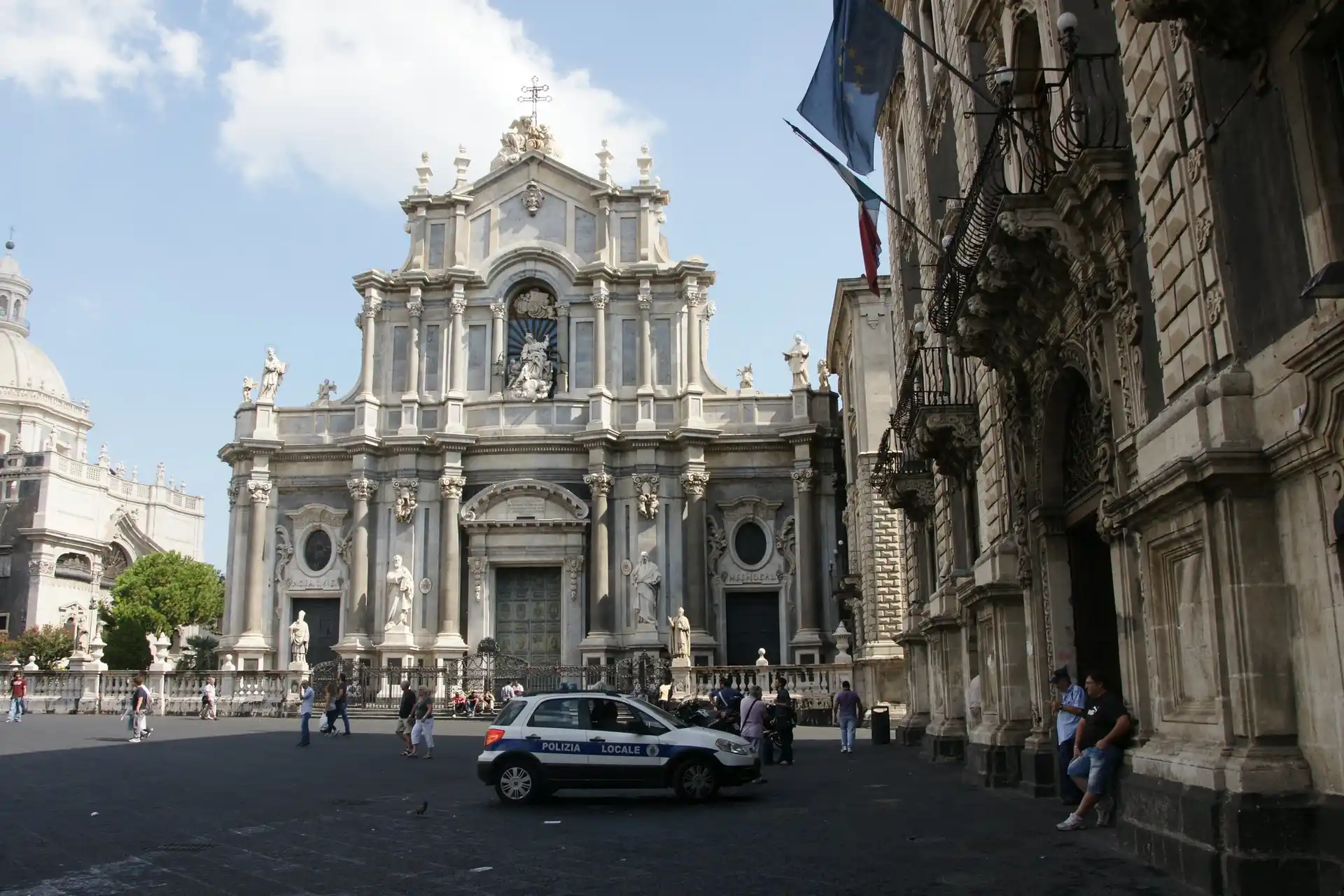
Catania's cathedral sits on the ruins of ancient Roman baths, built between 1078 and 1093 by order of Roger I of Sicily. The original structure looked more like a fortress than a church, a fortified stronghold designed to protect as much as to inspire. That military appearance reflected the reality of life in medieval Sicily, where faith and defense were inseparable.
The cathedral's history is marked by repeated devastation and resurrection. On February 4, 1169, a catastrophic earthquake collapsed the ceiling during religious festivities, killing the Archbishop and many worshippers gathered inside. Fire ravaged the building in 1194. Then, in 1693, another massive earthquake nearly destroyed it entirely. Each time, Catania rebuilt.
The Baroque masterpiece visible today is the work of architect Vaccarini, who reconstructed the cathedral between 1733 and 1761. Pope Pius XI elevated it to a minor basilica in 1926.
The legends surrounding Saint Agatha herself are extraordinary. According to tradition, when King Frederick II ordered the destruction of Catania in 1232, he attended mass here and miraculously found text appearing before his eyes: "Do not offend the country of Agatha, for she avenges injuries." He revoked the destruction order immediately. Another legend tells of an eruption of Mount Etna when the saint's burial veil was carried out to meet the advancing lava. The veil turned bright red, and the lava stopped.
A Questo quest through Catania connects this cathedral with the city's volcanic, medieval, and Baroque layers, turning every street into a story.
Zaplanuj wizytę
- Adres
- Piazza del Duomo, 7, 95131 Catania CT, Italy
Loading map…
Często zadawane pytania
What is the history of Catania Cathedral?
What are the legends of Saint Agatha?
Is the Cathedral of Sant'Agata free to visit?
What style is Catania Cathedral?
Play through this place