Place to visit / Athens
Theatre of Dionysus, Athens, Guida per visitatori e cosa fare nei dintorni
Plan your visit, then discover Theatre of Dionysus as part of a self-guided story through Athens.
Explore all of AthensSu un percorso da fare in autonomia
- 13 tappe
- 1.4 km
- 27 min
- ★ 4.5 (31)
Il percorso parte a 120 m da qui, circa 1 min a piedi
Informazioni su Theatre of Dionysus
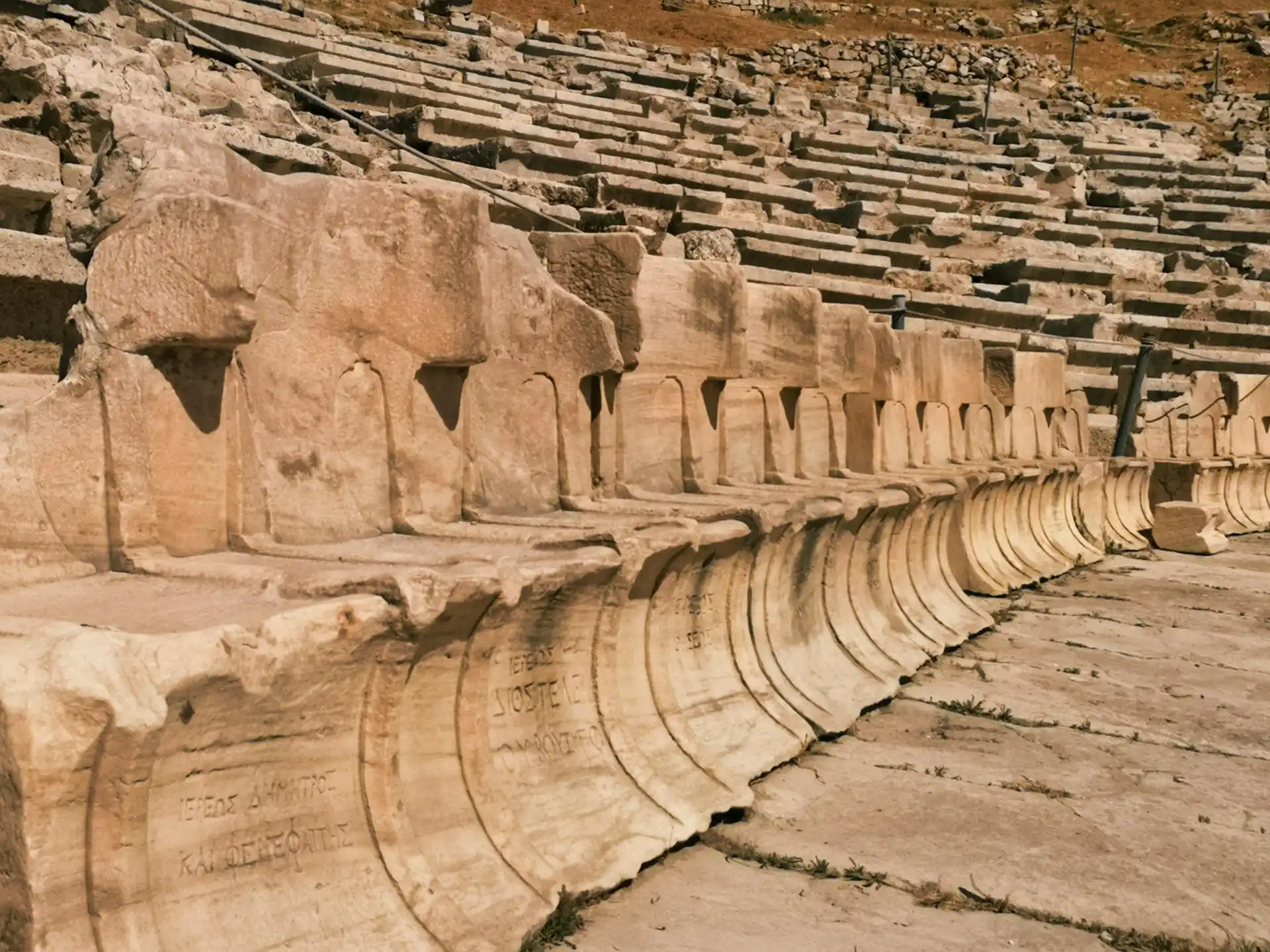
The Theatre of Dionysus, built on the south slope of the Acropolis, is considered the birthplace of Greek tragedy and comedy. This is where the form was invented, where Aeschylus, Sophocles, Euripides, and Aristophanes premiered the plays that established the fundamental structures and emotional power of theatrical drama. The building you see today was constructed as a permanent stone structure between 342 and 326 BC under the oversight of Lycurgus, but the theater itself was much older, with origins in the 6th century BC.
The original theater was built in the 6th century BC, likely with wooden structures that could be rebuilt as needed. The transformation to a stone theater was a gradual process that accelerated under Lycurgus' patronage. When the work was complete, the theater seated approximately 17,000 people, making it one of the largest theaters in the ancient world. That capacity reflects the importance of theatrical performance in Athenian culture; hundreds of thousands of Athenians would have attended plays over a season.
The competitions held at the Theatre of Dionysus were not entertainment in a modern sense. They were religious festivals, competitions sponsored by the state, funded by wealthy patrons, and tied to the worship of Dionysus. Playwrights submitted plays, judges determined winners, and the audience watched over multiple days as the greatest writers of their era presented works that explored fundamental questions about ethics, justice, violence, desire, and mortality.
What makes the Theatre of Dionysus extraordinary is its direct continuity with the texts and the culture it produced. You can read the surviving plays of Aeschylus, Sophocles, Euripides, and Aristophanes and know that they were performed in this space. The words that have survived have done so because they were powerful enough to be copied, preserved, and transmitted across centuries. The building is a tangible connection to a literary and cultural legacy that shaped Western civilization.
Organizza la visita
- Indirizzo
- Θέατρο Διονύσου, Αθήνα 105 58, Ελλάδα
Loading map…
Domande frequenti
When was the Theatre of Dionysus built?
How many people could it hold?
Which famous playwrights performed here?
Play through this place